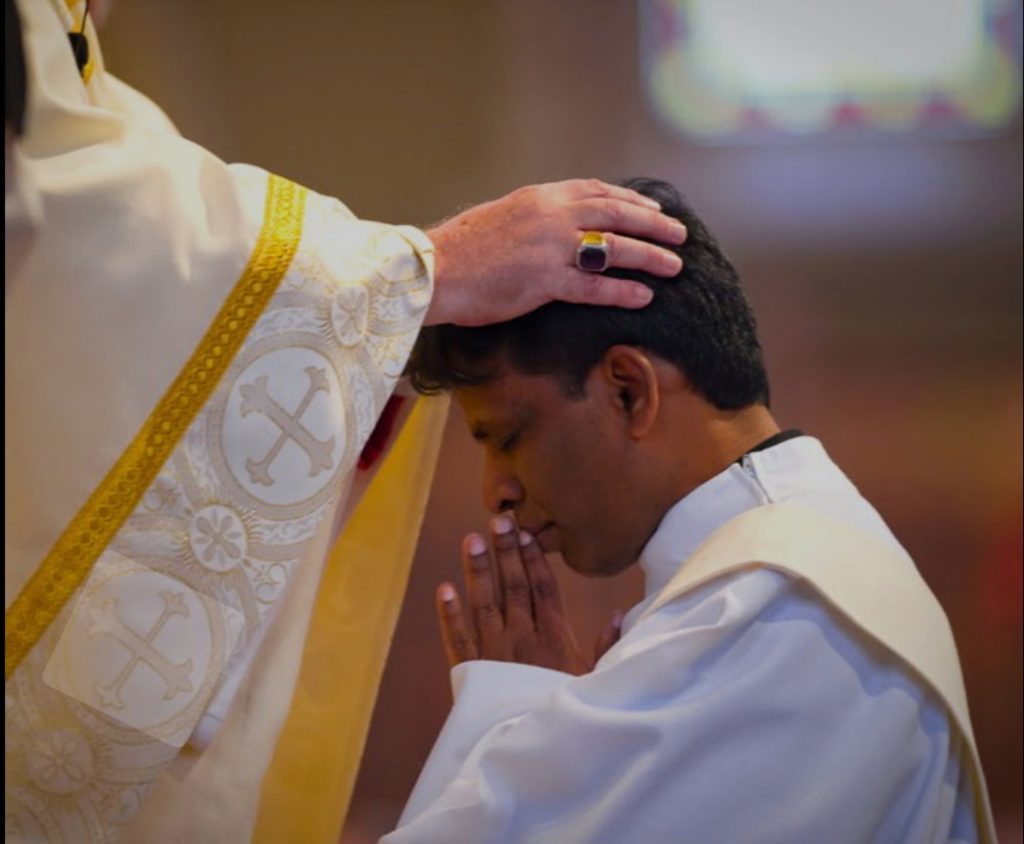
Each time I tell my hearing friends that I work with and for the Deaf, one of the questions I do expect from them is “can a Deaf become a priest”? Well, the question of a Deaf becoming a priest is a fascinating one, particularly in the context of how the Church includes and acknowledges individuals with disabilities in her ministerial roles. The sacrament of Holy Orders, which includes the ordination of deacons, priests, and bishops, is one of the key sacraments in the Catholic Church. It confers the grace necessary to carry out the duties of ministry, including preaching, administering sacraments, and providing pastoral care.
From the theological and canonical perspective on the Deaf becoming a priest, the primary concern for the Deaf, like any other person seeking to receive the sacrament of Holy Orders, is whether they meet the necessary requirements as established by canon law and the Church’s understanding of ministry. Canon law (specifically Canon 1024) requires that for someone to be validly ordained, he must be a baptized male. Beyond that, the person must have the necessary human and spiritual qualities, which include a vocation, commitment to celibacy, and the ability to carry out the ministry required of priests or deacons.
For the Deaf, the issue typically revolves around their ability to communicate effectively and perform the essential duties of the priesthood, which include preaching and leading liturgical celebrations (especially the Eucharist). The Church has considered this issue in different ways over time. Some of these practical considerations revolve around the following:
Communication: One of the challenges for Deaf candidates for Holy Orders is their ability to preach the Gospel and communicate effectively in the liturgy. Deaf individuals may rely on sign language, which poses a particular challenge for those who are called to the pastoral role of preaching to a congregation. However, in modern times, many dioceses have taken steps to include sign language interpreters in their liturgy, and in some cases, the Deaf themselves may serve as interpreters or ministers.
Education and Formation: The Seminary formation for Deaf individuals might be adjusted to accommodate their needs. This could include providing specialized sign language classes, sign language interpreters so as to adapt to the theological and pastoral training of the needs of the Deaf and ensuring that they can understand and participate fully in the intellectual and spiritual formation necessary for ordination.
Spiritual Life and Ministry: Beyond communication, there are also questions regarding the person’s ability to engage in the sacramental and pastoral duties required of priests. A Deaf person, like any other candidate, would be expected to lead and guide their parish, but adjustments might be made on how this is carried out. For example, they may have different means of leading homilies (through sign language, writing, or the assistance of an interpreter), but this would not necessarily disqualify them from ordination.
On the historical context of a Deaf becoming a priest, the Catholic Church, particularly in recent decades, has become more inclusive regarding the participation of people with disabilities in the ministry. For example, there are now Deaf individuals who serve as deacons and priests across the globe, and there have been increasing calls for inclusion of the Deaf community in the larger life of the Church.
However, the question of ordaining a Deaf person to the priesthood (especially to lead a congregation) has not been fully adopted in some dioceses. While no explicit canonical law excludes Deaf persons from the sacrament of Holy Orders, the practical aspects of ordination and ministry in the Church may create significant hurdles, particularly regarding the proclamation of the Gospel in a way that is accessible to all parishioners.
With regards to what the Church documents say about a deaf person becoming a priest, there isn’t a specific, widely circulated document from the Vatican directly addressing the Deaf and Holy Orders in detail. Still, documents from Vatican II, such as Lumen Gentium and Gaudium et Spes, emphasize the need for the Church to be inclusive and to ensure that all people, regardless of ability, are able to fully participate in the life of the Church. The Church has also issued documents emphasizing the need to welcome people with disabilities into the life of the Church, including their involvement in the ministry, though there are no specific rulings on ordination for the Deaf.
Be that as it may, my joy is that some dioceses and communities have taken positive steps to include the Deaf in the sacrament of Holy Orders, for example: the creation of formation programs specifically designed for Deaf seminarians, training of interpreters for Mass and other sacramental liturgies, and the ordination of Deaf individuals to the diaconate and priesthood through a significant preparation and adaptation to the unique needs of the candidates.
While the sacrament of Holy Orders is available to all Catholics, the question of the Deaf and ordination is a complex one, shaped by both theological considerations and practical concerns. The Church has been moving toward greater inclusivity, and the ordination of Deaf persons, while not the norm, is not entirely outside the realm of possibility, provided that the person is able to fulfill the roles and responsibilities of the ordained ministry. This would require flexibility and creativity in how the sacrament is administered and how ministry is carried out.
Fr. Charles Onumaegbu
Chaplain, Deaf Ministry