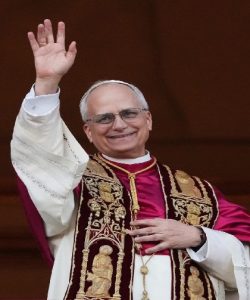
 This summer, as we rejoice in the historic gift of a newly elected American Pope, many are reflecting on the roots and purpose of Catholic Social Doctrine, especially in light of Cardinal Prevost’s chosen name: Pope Leo XIV. His name is no coincidence. It echoes the legacy of Pope Leo XIII, the father of modern social teaching, and invites us to look again at what the Church teaches about justice, society, and the human person.
Catholic Social Doctrine is not just a set of policies or rules. It is the Church’s moral vision for society, grounded in the Gospel and rooted in our deepest understanding of the human person. It is how we live out our faith in the public square, in our families, and in our ministries.
In 1891, Pope Leo XIII released Rerum Novarum, a groundbreaking encyclical that responded to the turmoil of the Industrial Revolution. He confronted the injustices of the time by reminding the world of a timeless truth: every person is made in the image and likeness of God, and society must be structured to honor and protect that dignity.
Perhaps Pope Leo XIV sees that our generation faces a new kind of revolution. Technology threatens human dignity in ways Pope Leo XIII could not have imagined. This moment demands that we, as Catholics, become re-committed to the principles of Catholic Social Doctrine and learning how to apply them in our ministries and lives.
At its heart, Catholic Social Doctrine is built on four main principles: the dignity of the human person, solidarity, subsidiarity, and the common good. Dignity reminds us that every person is sacred. Our dignity is based not on what we can do but in who we are. Every human person from the moment of conception is imbued with this ontological, unchanging dignity by virtue of their existence. It is from this dignity that we realize we are made for communion, and that is where solidarity comes into play. Solidarity is the affirmation of the principle that man was not made to be alone. We are called to live in communion with one another and, ultimately, God. When problems arise in society we then call upon the principles of subsidiarity which urges us to handle such problems at the smallest level possible (the family, the church, the city and so on). Finally, we have the common good, our goal. The common good is what we aim to achieve in upholding these principles; it is the good for all with detraction from none. The common good wants human beings to flourish, and we know that ultimately that flourishing comes when we order our lives toward God.
These teachings come alive in ministry. Consider the Walking with Moms in Need initiative. I was recently meeting with a number of our WWMIN ministers, and I couldn’t help but rejoice in the way this program so naturally lives out these principles. The program acknowledges the dignity of human persons, born and unborn, then it encourages ministers to stand in solidarity with pregnant and parenting mothers. The act of accompaniment is solidarity lived out. To stand beside someone who is struggling in ways we cannot imagine and do not understand, but to be with them nonetheless, is the ultimate expression of solidarity. Also, WWMIN as a whole works to solve problems at the smallest scale possible. When women find themselves in crisis pregnancies or overwhelming parenting situations, they don’t have to surrender themselves to a corporate or bloated entity that deals with these issues on the macro scale. Instead, by activating these ministries at the parish level, we have the opportunity to cut out waste and meet women where they are. This initiative is a lived expression of solidarity. We do not just speak for vulnerable mothers; we walk with them. We listen. We support. We accompany. This is Catholic Social Doctrine in action. It is not just policy or preaching, but presence.
In the Respect Life movement, we are not only defending life, but we are also proclaiming a vision for human flourishing, one that sees the face of Christ in the vulnerable and bends low to wash the feet of the suffering.
Pope Leo XIII helped the Church face the modern world with clarity and courage. May Pope Leo XIV’s name remind us to do the same. Let us continue this legacy in every maternity home, every parish bulletin, every sidewalk, and every heart.